States

Love Me, Love My Microbiome

Posted in Maryland, Nursing News, Obesity

Jezper - Fotolia.com

Bacteria is bad. Right?

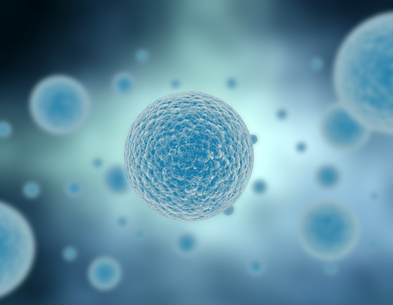
That is now being rethought. The New York Times has a fascinating article about new research into the “good bacteria” that live in or on the human body — all 100 trillion of them.

They’re needed for digesting food, forming barricades against the bad bacteria, even synthesizing some vitamins. But we’ve known remarkably little about them — what they look like in healthy people, and how they vary amongst individuals.

The Human Microbiome Project has been looking into this, and what they’ve found is pretty cool.

Each person’s collection of microbes, the microbiome, was significantly different from another person’s.

Their work has helped establish criteria for a healthy microbiome, so more is known about how to fix one that isn’t functioning correctly. It also helps figure out what antibiotics do to a microbiome, and how long it takes for the microbiome to recover from antibiotics.

The various microbiomes also help explain why different people react differently to various drugs, and why some people are more vulnerable to certain infectious diseases. When microbiomes cease to function correctly they are thought to contribute to chronic diseases and conditions such as asthma, irritable bowel syndrome, and maybe even obesity.

Dr. David Relman, a Stanford microbiologist, describes the microbiome as analogous to coral, with humans taking the coral role and the bacteria as the many life-forms that live within it. Dr. Barnett Kramer, from the National Cancer Institute in Maryland, says that instead we should instead consider ourselves mostly made of microbes. “We may just serve as packaging.”

The microbiome starts to grow at birth, said Lita Proctor, program director for the Human Microbiome Project. As babies pass through the birth canal, they pick up bacteria from the mother’s vaginal microbiome.

“Babies are microbe magnets,” Dr. Proctor said. Over the next two to three years, the babies’ microbiomes mature and grow while their immune systems develop in concert, learning not to attack the bacteria, recognizing them as friendly.

Babies born by Caesarean section, Dr. Proctor added, start out with different microbiomes, but it is not yet known whether their microbiomes remain different after they mature. In adults, the body carries two to five pounds of bacteria, even though these cells are minuscule — one-tenth to one-hundredth the size of a human cell. The gut, in particular, is stuffed with them.

“The gut is not jam-packed with food; it is jam-packed with microbes,” Dr. Proctor said. “Half of your stool is not leftover food. It is microbial biomass.” But bacteria multiply so quickly that they replenish their numbers as fast as they are excreted.

The bacteria also help the immune system, Dr. Huttenhower said. The best example is in the vagina, where they secrete chemicals that can kill other bacteria and make the environment slightly acidic, which is unappealing to other microbes.

Including the microbiome as part of an individual is, some researchers said, a new way to look at human beings.

It was a daunting task, though, to investigate the normal human microbiome. Previous studies of human microbiomes had been small and had looked mostly at fecal bacteria or bacteria in saliva in healthy people, or had examined things like fecal bacteria in individuals with certain diseases, like inflammatory bowel disease, in which bacteria are thought to play a role.

But, said Barbara B. Methé, an investigator for the microbiome study and a microbiologist at the J. Craig Venter Institute, it was hard to know what to make of those studies.

“We were stepping back and saying, ‘We don’t really have a population study. What does a normal microbiome look like?’ ” she said.

The first problem was finding completely healthy people for the study. The investigators recruited 600 subjects, ages 18 to 40, poking and prodding them. They brought in dentists to probe their gums, looking for gum disease, and pick at their teeth, looking for cavities. They brought in gynecologists to examine the women to see if they had yeast infections. They examined skin and tonsils and nasal cavities. They made sure the subjects were not too fat and not too thin. Even though those who volunteered thought they filled the bill, half were rejected because they were not completely healthy. And 80 percent of those who were eventually accepted first had to have gum disease or cavities treated by a dentist.

When they had their subjects — 242 men and women deemed free of disease in the nose, skin, mouth, gastrointestinal tract and, for the women, vagina — the investigators collected stool samples and saliva, and scraped the subjects’ gums and teeth and nostrils and their palates and tonsils and throats. They took samples from the crook of the elbow and the folds of the ear. In all, women were sampled in 18 places, including three sites in the vagina, and men in 15. The investigators resampled subjects three times during the course of the study to see if the bacterial composition of their bodies was stable, generating 11,174 samples.

To catalog the body’s bacteria, researchers searched for DNA with a specific gene, 16S rRNA, that is a marker for bacteria and whose slight sequence variations can reveal different bacterial species. They sequenced the bacterial DNA to find the unique genes in the microbiome. They ended up with a deluge of data, much too much to study with any one computer, Dr. Huttenhower said, creating “a huge computational challenge.”

The next step, he said, is to better understand how the microbiome affects health and disease and to try to improve health by deliberately altering the microbiome.

But, Dr. Relman said, “we are scratching at the surface now.”

It is, he said, “humbling.”

UC-Davis Graduating First Class of Nurses

Posted in California, Nursing, Nursing Jobs, Nursing News, Nursing School

russelllinton - Fotolia.com

Five years ago, philanthropist Betty Irene Moore donated $100 million to the University of California – Davis, moving the School of Nursing from dream to reality. This week, the first group of nurses will graduate from the program.

25 students who were recruited for their talent and whose education was fully funded by scholarships will be graduating. The hope is that they represent a new breed of well-educated nurses who will transform the health care system.

In this article in the Sacramento Bee, the School of Nursing Dean Heather Young said, “Our goals and priorities are to improve the health care system and advance the health of our communities. We realize that nurses can, and should be, the catalysts of change.”

Young called this year’s class of graduating nurses “just a beginning.” Already another 25 students are queued up for the next two years, with more than 30 percent of them coming from underrepresented ethnic communities. The school also enrolls doctoral students in a four-year program.

In a seminal 2010 report on the future of nursing, the Institute of Medicine concluded that health care reform meant “nursing education must be fundamentally improved both before and after nurses receive their licenses.”

With the population growing older and chronic diseases taking center stage, the IOM report, which Young endorses, determined that “nurses should achieve higher levels of education and training through an improved education system that promotes seamless academic progression.”

Young said she was drawn to the position of dean because she, too, was inspired by the vision of Betty Moore.

The story of how Moore decided to commit $100 million over 11 years to a new school of nursing is a tale of personal belief in change.

Moore had been in a hospital and experienced a medication error. A nurse had insisted she take a shot, but Moore objected. The nurse gave her the shot anyway.

It turned out the shot of insulin was meant for a neighboring patient and potentially put the health of both patients at risk.

Says nurse Johnston, “What impresses me most is that Betty Irene Moore, a person with a lot of money, didn’t go blaming the individual or the system, she did the opposite. She decided she could do something positive about the problem of medical errors, make change for the better and build a better nurse.”

Specifically, Johnston’s job, which he says is a project of the Gordon and Betty Moore Foundation, is to be an educator, a monitor and a resource to prevent patients from getting hospital-acquired infections from improper use of ventilators, intravenous tubes, catheters and the like.

In the status-quo health care system, such infections have come to be seen as somewhat of a statistical inevitability – even to the point where patients’ rights groups routinely tracked and reported their occurrence in various hospitals.

“The culture and belief that infections are a part of a hospital stay needs to change,” Johnston said.

In an interview at the UC Medical Center where he works, Johnston said his job is called “nurse champion.”

He works as part of a collaborative system for higher quality by advising and teaching medical staff on ways to curb hospital infections.

It’s a challenging and new role for Johnston, who’s worked as a nurse for 5 1/2 years.

“We are colleagues with physicians and nurses and aides,” he said. “We are change agents in the system.”

To be sure, Johnston’s gotten some push back already in his new job in the UC Davis Medical Center’s burn unit. But he’s prepared to tap into the communication and leadership skills he’s learned to overcome the skepticism.

“I was seen as an outsider, someone to audit them and get them in trouble,” Johnston said of his colleagues. “There was some question of my credibility and credentials both from nurses and the physician side. It’s a challenge. It takes time to get that buy-in.”

K-9 Team Puts Nurses at Ease

Posted in Maryland, Nurse Safety, Nursing, Nursing News

b elena53 - Fotolia.com

The emergency department in a hospital can be a very tense place. Injured people want to be tended to immediately, their family members get upset on their behalf, two people from an altercation can both wind up at the same hospital — there are many reasons why emotions can spill over and difficult situations can develop. And such situations can be stressful and dangerous for nurses as well as patients and their families.

At a hospital in Baltimore, a two-member security team is called when things start to get heated. One member of the team is human, but the other is a German Shepherd. Often just the dog’s presence can serve as a calming influence, according to this article on Nurse.com. The dogs add “another level of authority,” according to the hospital’s clinical director for the ED, and “They have a nice presence.”

The hospital is in a high-risk crime area, and started using a K-9 unit in 1994 to help curb violence on the campus. Administrators think that the dogs’ presence has had a profound effect.

“Our director goes to downtown meetings in Baltimore [with other hospital administrators] and they share crime statistics,” said Mark Ross, captain of Mercy’s K-9 Unit. “It’s well-known within the city that Mercy has dogs and it’s not a place to go for crime.”

Ross and four other handlers have their dogs with them at work and at home. The dogs are imported from Europe and trained for protection and to hunt human and explosive odors. Ross, who has partnered for two years with Iko, said the dogs can track someone on the campus, find explosive devices and protect hospital personnel. Working in a hospital requires the dogs to be more sociable than other police dogs. The Mercy dogs must have the ability to be friendly one minute and ready for business the next. “It makes it a little more tricky when it comes to selecting a dog for this environment,” Ross said. “The dogs are tempered because they have to be sociable. They also have to have the ability to work or apprehend on command.”

The dogs at Mercy develop friendships with nurses and patients and are able to enjoy some attention.

“The staff loves them,” said Janet Norman, RN, MS, PCCN, nurse manager, progressive care unit. “When they are training a younger dog, a guard may say, ‘You can’t come close to this one.’ The older dogs, you can talk to them and pet them.”

There is time for pleasure, but during most of the 10-hour shifts, the handlers’ and dogs’ time is for work.

“There is an added sense of protection here,” Norman said. “We had a disturbance once and a family had become so angry. I’m not sure it was directed at us, but it was very frightening. Security came up with the dog and everyone quieted down. There was no feeling that there would be any harm to anyone.”

Handlers and dogs also may walk nurses to their cars in the parking lot. “It gives us peace of mind,” Disney said. “It’s interesting the effect when you have a really busy waiting room. The dogs have a tendency to calm everybody down. It’s a distraction as much as anything, (to) watch the dog for a minute. We joke and call them our favorite security officers.”

And like any smart dog, the Mercy K-9 dogs remember where their friends are when making the rounds. “We have a couple nurses who sneak biscuits for them,” Disney said. “They know where those nurses work and go right to them.”

Nurses Play a Crucial Role in American Health Care

Posted in Nursing, Nursing Jobs, Nursing News, Pennsylvania

Misha - Fotolia.com

In an editorial, the Reading Eagle says that the community should take a moment to salute its nurses.

Noting that pretty much everyone has been cared for by a nurse, a nurse practitioner, or a licensed practical nurse, the editorial recognizes “all in the nursing profession who have come so far since Florence Nightingale founded the modern nursing movement.”

Nurses have always been important but are becoming even more important for a variety of reasons, including changes in the law and industry trends. Nurses are an integral part of a patient’s medical team and are consulted along with the primary care doctor, physical and occupational therapists, pharmacists, and more. Nurses are also increasingly taking on an advocacy role, studying patient histories and catching mistakes in medications.

They’re also doing more in-home care, due to health insurance trends towards shorter hospital stays.

And nurse practitioners can write prescriptions and do some of the more routine tasks that doctors usually do, thereby easing some of the pressures on the system and filling the gap left by the decreasing number of family doctors and general practitioners.

Nurses aren’t just generalists anymore. All require continuing education, and many require certification in a specialty, such as surgery, pediatrics or trauma. As was recently reported in the Reading Eagle, some nurses even are trained in the specialty of collecting forensic evidence from rape victims to be used by law enforcement in court cases.

Along with all the other changes in the profession, technology has changed nursing in ways that still are being measured.

As The New York Times reported in January: “In just a few years, technology has revolutionized what it means to go to nursing school, in ways more basic – and less obvious to the patient – than learning how to use the latest medical equipment.

“Nursing schools use increasingly sophisticated mannequins to provide realistic but risk-free experience; in the online world Second Life, students’ avatars visit digital clinics to assess digital patients.

“But the most profound recent change is a move away from the profession’s dependence on committing vast amounts of information to memory. It is not that nurses need to know less, educators say, but that the amount of essential data has exploded.”

We hope that the use of technology doesn’t replace the personal care members of the nursing profession are known for and that attracts men and women to the profession.

It is that personal care that we and other members of the health care profession depend on.

Nurse Practitioners: Health Care Reform’s Missing Link

Posted in California, Nursing, Nursing Jobs, Nursing News, Nursing Specialties

© Jose Manuel Gelpi-Fotolia.com

Patricia Dennehy RN NP has written an Op-Ed for the Los Angeles Times explaining the role that Nurse Practitioners have as millions of people find new health care providers as part of expected Health Care reforms.

She says that about 30 million people in America will be looking for new health care providers, about 6.9 million of them in California, where she lives and works.

Unfortunately it won’t be very easy, as primary care physicians are increasingly moving to other types of practices, especially higher-paid specialties.

Dennehy argues that Nurse Practitioners, with their training and experience, are perfectly poised to fill that gap. “We’re fully prepared to provide excellent primary care,” she says.

Clinics like the one I direct in the heart of San Francisco’s Tenderloin district — GLIDE Health Services — offer a hopeful glimpse into California’s healthcare future. We are a federally funded, affordable clinic, run almost entirely by nurse practitioners. At our clinic, we nurses and talented specialists provide high-quality, comprehensive primary care to more than 3,200 patients each year.

Despite the special hardships of our clientele, who daily cope with the negative effects on health caused by poverty, unemployment and substance abuse, our results routinely compare favorably with those of mainstream physicians. Our patients with diabetes, for example, report regularly for checkups, take their meds as directed and maintain relatively low average blood-sugar levels.

This high standard of care provided by nurse practitioners has been confirmed in several studies, including a 2009 Rand Corp. report, which found that “nurse practitioners provide care of equivalent quality to physicians at a lower cost, while achieving high levels of patient satisfaction and providing more disease prevention counseling, health education and health promotion activities than physicians.”

At last count, there were more than 250 nurse-run clinics nationwide similar to GLIDE Health Services. We and about 20 others are funded by a special federal program for affordable care. In all of these projects, nurse practitioners offer both primary and preventive care, including mental health services and screening for HIV and diabetes.

Researchers have confirmed that such clinics not only improve local health but also save taxpayers money. Nurse practitioners’ salaries are generally lower than those of physicians. At the same time, the comprehensive care we provide can significantly reduce the costly emergency room visits used by all too many low-income Americans as their default healthcare.

Unfortunately, some major obstacles stand in the way of expanding our money-saving model. One big hurdle is the reluctance of leading private health plans to contract with nurse practitioners as primary care providers. Even as Medicare, Medi-Cal and pioneering local programs for the uninsured, such as “Healthy San Francisco,” now contract with nurse practitioners to provide such care, a 2009 study by the National Nursing Centers Consortium found that nearly half of the country’s major managed care organizations don’t.

Some of the holdout companies require nurses to bill for their services under a physician’s supervision. California’s insurance code only requires insurance companies to contract with nurse practitioners for primary care when it involves Medicare or Medi-Cal. If the code were expanded to include all coverage, access in the state would be greatly improved. There is room for reform on these fronts and others, and we should get started now to enact change.

In October 2010, the Institute of Medicine, an arm of the National Academy of Sciences, issued a landmark report called “The Future of Nursing,” in which it urged that nurses be “full partners, with physicians and other health care professionals, in redesigning health care in the United States.” At clinics such as GLIDE Health Services, we’re showing that we’re more than ready to answer this challenge, and take our places on the front lines of healthcare reform in America.